

Most people avoid risk.
They want guarantees.
They want stability.
They want certainty before they move.
That’s exactly why most people never build anything significant.
Jeremy Delk learned this lesson early—and brutally.
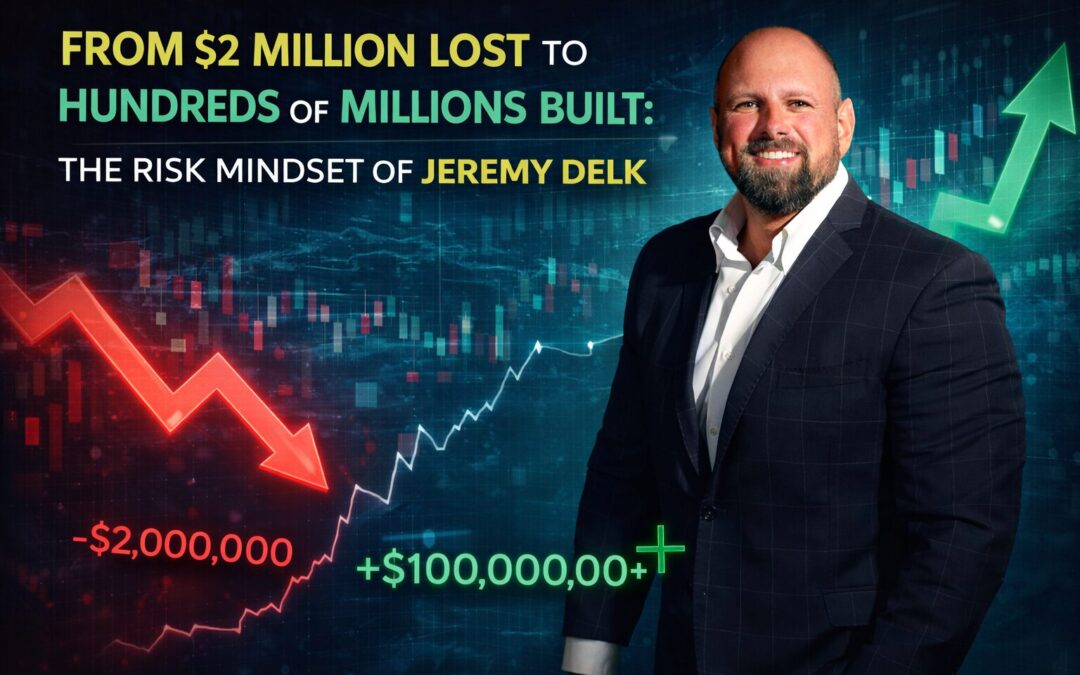
At just 19 years old, he turned $30,000 into nearly $2 million…
…and then lost it all in a matter of days.
Most people would’ve walked away.
He didn’t.
That moment didn’t break him.
It rewired him.
The Difference Between Risk and Recklessness
Most entrepreneurs think they’re taking risks.
They’re not.
They’re being reckless.
Recklessness is:
- emotional decision-making
- ego-driven bets
- chasing fast wins
- ignoring downside
Risk, on the other hand, is:
- calculated
- intentional
- structured
- survivable
Jeremy’s early loss forced him to understand something most people never truly grasp:
The goal isn’t to avoid risk. It’s to manage it so you can stay in the game.
Pain as a Teacher
Losing that level of money that early does something to you.
It strips away:
- arrogance
- assumptions
- false confidence
And replaces it with:
- discipline
- pattern recognition
- emotional control
Jeremy didn’t just recover financially.
He rebuilt with a completely different mindset.
Building a Smarter Playbook
After that loss, Jeremy didn’t quit.
He evolved.
He went on to:
- build and scale multiple companies
- develop a diversified investment portfolio
- generate hundreds of millions in revenue across industries
But more importantly…
He stopped playing short-term games.
He focused on:
- sustainability over speed
- structure over hype
- strategy over emotion
The Real Lesson
Failure isn’t the opposite of success.
It’s the entry fee.
Most people experience failure and retreat.
Jeremy experienced failure and recalibrated.
That’s the difference.
Why This Gives Him an Edge
Most investors:
- haven’t lost big
- haven’t rebuilt
- haven’t been forced to rethink everything
Jeremy has.
Which means when he evaluates risk today, he’s not guessing.
He’s drawing from experience most people would never willingly go through.
And that experience?
That’s where conviction comes from.